
- Home
- Destinations
- Aswan to Abu Simbel Tour: Weekly Boat Trips with Dabuka Tours
- Bedouin Culture and Boat Safari
- Discover Nubia: A Journey Through Time and Tranquility
- Embark on an Enchanting Journey: Exploring Egypt by Boat
- New Year’s Eve Under the Stars: A Captivating Voyage on Lake Nasser
- Philae Temple – Luxury Safari Boat and Oases
- Lake Nasser Yoga Retreat aboard the Dabuka Blue
- Birdwatching on Lake Nasser
- Egypt Desert Expedition – 12 Days Off the Beaten Track
- Western Desert Oases Tour – From Cairo to Luxor
- Petrified Forest Historical Site: Journey Through Time
- Nile Cruise and Egypt Desert Safari: The Ultimate Adventure Tour – Aswan to Cairo
- Sand Dunes Egypt: A Journey into the Infinite
- Siwa Oasis Egypt – where the unusual is at home
- Dance Heritage Show: Celebrate Egyptian Culture
- Explore Wadi El Natrun: Ancient Monasteries and Christian History
- Felucca Ride at Sunset in Luxor
- Private Plane Adventures – Soar Above the Pyramids
- Cairo by Night. Why it is a Must Do!
- Sand Burial Treatment: A Holistic Healing Experience in Siwa Oasis
- Swimming with dolphins at Dolphin house Sataya Reef
- Skydiving Egypt – A Unique Paramotor Flight Experience 1.67 out of5
- Services
- About Us
- Plan Your Trip
- Resources
- Contact
 Deutsch

- Home
- Destinations
- Aswan to Abu Simbel Tour: Weekly Boat Trips with Dabuka Tours
- Bedouin Culture and Boat Safari
- Discover Nubia: A Journey Through Time and Tranquility
- Embark on an Enchanting Journey: Exploring Egypt by Boat
- New Year’s Eve Under the Stars: A Captivating Voyage on Lake Nasser
- Philae Temple – Luxury Safari Boat and Oases
- Lake Nasser Yoga Retreat aboard the Dabuka Blue
- Birdwatching on Lake Nasser
- Egypt Desert Expedition – 12 Days Off the Beaten Track
- Western Desert Oases Tour – From Cairo to Luxor
- Petrified Forest Historical Site: Journey Through Time
- Nile Cruise and Egypt Desert Safari: The Ultimate Adventure Tour – Aswan to Cairo
- Sand Dunes Egypt: A Journey into the Infinite
- Siwa Oasis Egypt – where the unusual is at home
- Dance Heritage Show: Celebrate Egyptian Culture
- Explore Wadi El Natrun: Ancient Monasteries and Christian History
- Felucca Ride at Sunset in Luxor
- Private Plane Adventures – Soar Above the Pyramids
- Cairo by Night. Why it is a Must Do!
- Sand Burial Treatment: A Holistic Healing Experience in Siwa Oasis
- Swimming with dolphins at Dolphin house Sataya Reef
- Skydiving Egypt – A Unique Paramotor Flight Experience 1.67 out of5
- Services
- About Us
- Plan Your Trip
- Resources
- Contact
- Deutsch

Sun Eclipse Egypt 2027: Most journeys are built around movement. Airports, monuments, hotel check-ins. We measure success in distance covered and boxes ticked. Yet some forms of travel begin only once movement slows — when attention shifts away from what is ahead and settles instead on what is above. In these moments, the rhythm of travel changes. The pace of the day gives way to the pace of the sky. Time itself seems to stretch, measured not in miles or hours, but in rising stars and shifting shadows.
Astronomy travel belongs to this quieter category. It does not promise spectacle on demand. It invites patience. To wait for night, to allow darkness to settle, and to look up without expectation. To feel the slow rotation of the Earth mirrored in the arc of constellations. In doing so, it changes not only what we see, but how we travel — turning a journey into an experience where curiosity, wonder, and presence become as important as any destination
Why the Night Sky Changes the Way We Travel
The night sky rearranges priorities. Without artificial light, familiar rhythms dissolve. Time feels less urgent. Conversation softens. Even experienced travellers find themselves uncharacteristically still, drawn into the quiet rhythm of the heavens. The ordinary measures of a day — schedules, checklists, destinations — fade, replaced by the subtle movements of stars and planets.
Astronomy does not require technical knowledge. It requires presence. Eyes adjust. Patterns emerge. Stars appear not as isolated points, but as part of a larger structure, connected in ways that only patience can reveal. Travel shaped around these moments becomes slower by necessity, more reflective by design, inviting contemplation and quiet conversation under the canopy of the night.
This is why astronomy travel rarely fits into conventional tourism models. It cannot be rushed. It rewards those willing to linger, to notice, and to let the universe unfold on its own time, offering experiences that endure long after the journey itself has ended.
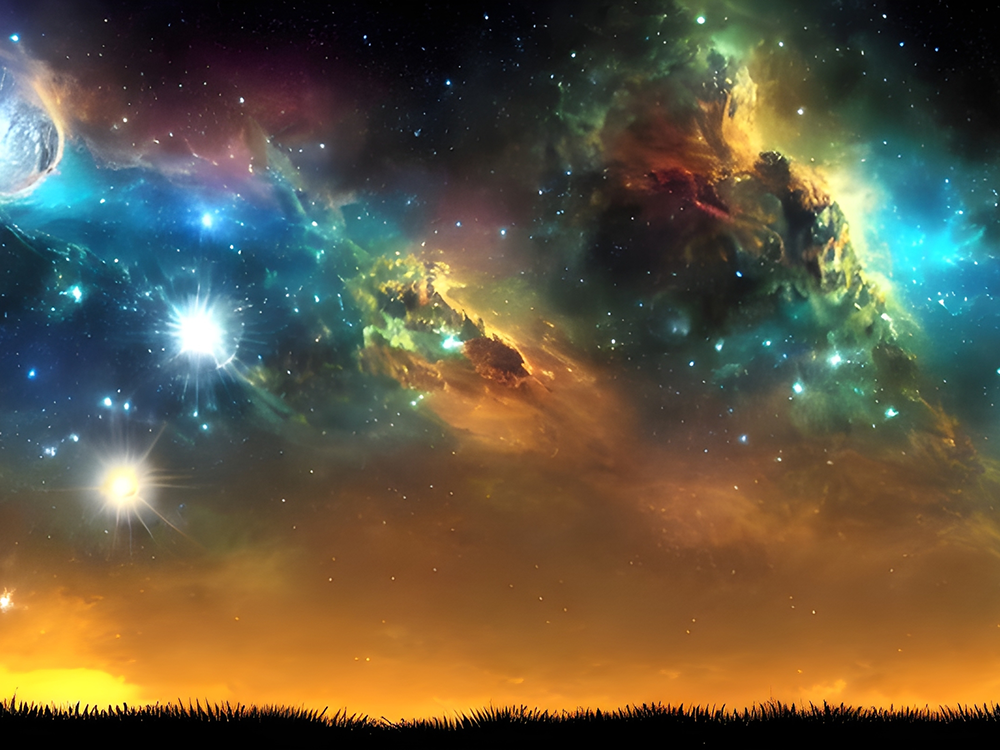

Stargazing in Egypt – Where Silence Still Exists
Egypt offers an increasingly rare combination for stargazing: space, darkness, and continuity. Beyond its cities, the landscape opens into deserts and oases where artificial light fades quickly and the horizon remains uninterrupted.
Stargazing in Egypt benefits from stable weather and vast dark sky destinations, but also from geography. Journeys that move gradually south — from Cairo through the Western Desert, onward to the Nile and Lake Nasser — follow a natural rhythm that aligns day and night rather than competing with them.
Here, darkness is not an inconvenience. It is an asset.
From Oases to the Night Sky: A Journey South
Astronomy travel works best when learning feels informal and unforced. Accompanied by experienced astronomers, observation becomes a shared journey rather than a classroom lesson. Laser pointers trace constellations across the night sky, linking myths, science, and orientation. Silence and conversation alternate naturally, allowing space for wonder as well as explanation. Questions emerge in the moment, sparked by what is seen rather than what is taught. Knowledge is offered as a response to curiosity, not delivered as instruction.
This approach keeps science open and welcoming. It replaces abstraction with immediacy: the distance of a star explained while it shines directly overhead, or the slow movement of planets followed night after night as they shift against the background sky. Familiar patterns become clearer with each observation. Concepts settle in through repetition, atmosphere, and place. Understanding grows from experience and context, turning the sky from something distant into something personally understood.


Suneclipse Egypt 2027: Learning Under the Stars Without a Classroom
Astronomy travel works best when learning feels informal. Accompanied by experienced astronomers, observation becomes a shared process rather than a lesson. Laser pointers trace constellations. Questions arise organically. Knowledge is offered in response to curiosity, not delivered as instruction.
This approach keeps science accessible. It replaces abstraction with immediacy: the distance of a star explained while it is visible overhead, the movement of planets followed across consecutive nights. Understanding grows through repetition and context rather than explanation alone.
Astronomy travel works best when learning feels informal and unforced. Accompanied by experienced astronomers, observation becomes a shared journey rather than a classroom lesson. Laser pointers trace constellations across the night sky, linking myths, science, and orientation. Questions emerge naturally in the moment, sparked by what is seen rather than what is taught. Knowledge is offered as a response to curiosity, not delivered as instruction.
This approach keeps science open and welcoming. It replaces abstraction with immediacy: the distance of a star explained while it shines directly overhead, or the slow movement of planets followed night after night as they shift against the background sky. Concepts settle in through repetition, atmosphere, and place. Understanding grows from experience and context, turning the sky from something distant into something personally understood.
Luxor: Where History Meets the Sky
In Luxor, the relationship between earth and sky becomes explicit. By day, the West Bank and Karnak Temple reveal how closely architecture and astronomy were once intertwined. Alignments with solar cycles and celestial events remind visitors that observation has long shaped this landscape.
At night, away from the city’s brightest areas, the sky reclaims attention. The contrast between monumentality and cosmic scale adds depth to both. History feels less distant when viewed under the same stars that once guided its builders.


From the Nile to Lake Nasser
Further south, the Nile widens and modern development thins. Along Lake Nasser, particularly near the Amada region, darkness returns with clarity. Settlements are few. Light pollution is minimal. The horizon remains open.
Lake Nasser stargazing offers ideal conditions for extended observation. Reflections on the water soften the transition between sky and land, creating a sense of immersion rather than separation. It is here that meteor shower observation becomes less about watching and more about waiting — allowing the sky to unfold at its own pace.
Meteor Showers and Fleeting Encounters
Meteor showers are reminders of impermanence. A streak of light lasts seconds, sometimes less. Yet the anticipation stretches across hours. Shared silence becomes part of the experience.
The Lyrids, visible in April, have been observed for over two millennia. Witnessing them from a dark sky location such as Lake Nasser transforms their impact. Instead of isolated events, they become part of a continuous night — subtle, unpredictable, and quietly profound.
These moments resist documentation. What remains is memory, shaped by place and attention rather than image.


Looking Ahead to the Total Solar Eclipse 2027
Not all celestial events are fleeting. Some arrive with precision, inviting preparation years in advance. In 2027, a total solar eclipse will once again turn daylight into twilight, drawing observers to carefully chosen locations across its path.
Interest in solar eclipse travel reflects a growing desire for experiences rooted in timing and place. An eclipse cannot be staged or extended. It rewards those willing to travel with intention and patience — the same qualities that define astronomy travel at its best.
For travellers already attuned to the rhythms of the night sky, an eclipse feels less like an anomaly and more like a continuation.
When Understanding Becomes the Destination
Astronomy travel leaves subtle traces. It does not overwhelm with information or spectacle. Instead, it recalibrates attention. It teaches travellers to pause, to observe, and to accept uncertainty.
In Egypt, this approach reveals a deeper coherence between land, history, and sky. From the stillness of desert oases to the open horizons of Lake Nasser, the journey becomes less about accumulation and more about understanding.
Some journeys are remembered for where they took us. Others for how they changed the way we look. Under a dark sky, understanding itself becomes the destination.
