Oasis trip Egypt: 6 days between Cairo and Luxor
What is meant by an oasis trip?
Oasis trip Egypt: In most people’s minds, the terms “oasis” and “desert” are of course very closely linked. On the one hand that is true, but on the other hand it is not.
I love the desert with sand dunes and rock formations and space and silence. But when I’m traveling in the desert with my husband, we sleep in tents – or under the stars. Day trips are dedicated to crossing dunes, digging out the car when it gets stuck) and the feeling of not knowing exactly where you will set up camp in the evening.
This is a very unique and very beautiful form of travel – but not the only one in Egypt.
Oases
When we drive from oasis to oasis, we cross the desert landscape, but with a fixed point of reference – every evening we lie down to rest in new surroundings – but with a solid roof over our heads.
This trip will appeal to those who want to experience something different than the standard tours, but at the same time don’t miss out on the comfort of a daily shower.
I still remember a friend’s comment when she went to Bahareya for the first time: “My goodness, it looks like a real city. I imagined something different when it came to a romantic oasis!”
And that’s true. Bahareya is busy, more noisy than quiet – unless you know where to go to enjoy the tranquility of a hot spring or a walk in a date palm grove.Then suddenly my friend said: “Oh, now it feels more like an oasis!”


Important facts about the Western Desert of Egypt:
Geographically we are in the Western Desert of Egypt, in my opinion one of the most beautiful landscapes. And more precisely, the tour only leads through a smaller part of this desert.
Geography & Extent: It covers around two thirds of Egypt’s land area, from the Mediterranean coast to Sudan and from the Nile Valley to the Libyan border.
Geology & History: The area was a sea 80 million years ago, which is why shell and coral fossils can be found there.
Climate: Very hot during the day in summer (pleasantly warm in winter), cold at night. You should always have a sweater with you for the evening!
So we are crossing a comparatively small but special part.
The key highlights in detail:
- Bahariyya Oasis: Gateway to the White Desert; famous for the “Black Mountains” (of volcanic origin), the golden mummies from the Pharaonic period and hot springs.
- Farafra Oasis: The starting point to the White Desert (National Park) with bizarre limestone sculptures that look like mushrooms or icebergs, as well as the Black Desert.
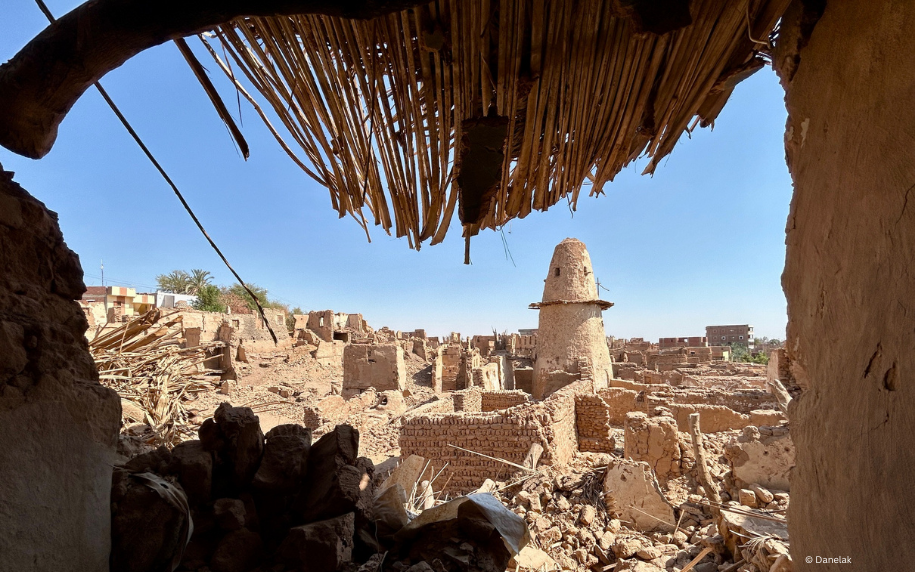
- Dakhla Oasis: Offers one of the most beautiful oasis landscapes with the medieval city of Al-Qasr, hot springs and Roman temples.
- Kharga Oasis: The largest oasis with important ancient sites such as the Hibis Temple, the Bagawat Christian Cemetery and the Bulaq Springs, known for their therapeutic properties.
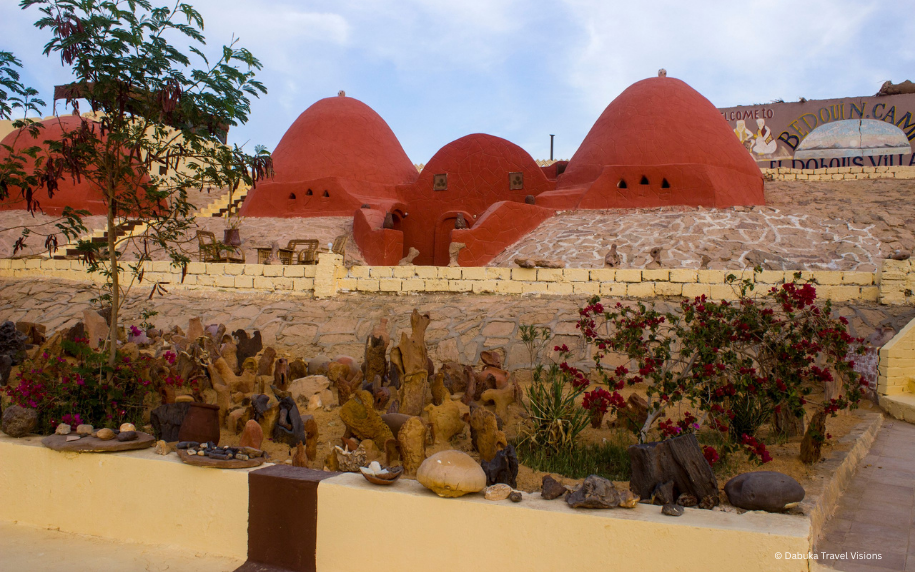
Oasis Trip Egypt: Personal experience
My own favorite is the Dakhla oasis.
Maybe I tend to see things a bit romantically, because Dakhla is actually a sprawling, partly urban collection of habitats. But the old town of Al Qasr alone makes you quickly forget that you live in the 21st century.
Another friend of ours founded a women’s initiative in this area. The women meet regularly and make crafts from local materials, which are then sold with the help of our friend. I already own a few of these bags and find them not only beautiful, but actually practical.
And of course everyone carries their very personal memories with them.
New Year in the Oasis
When my husband and I drove towards Luxor a few years ago, we stopped near Dakhla on New Year’s Eve.
It’s always been important for me to celebrate the New Year a little differently. I’m not one of those people who just goes to bed before midnight that night – like every other night of the year.
Of course, you think about it every year – what should I do on New Year’s Eve?This year it was clear: we stayed overnight in the so-called “German House”, a residence for scientists who appear sporadically.
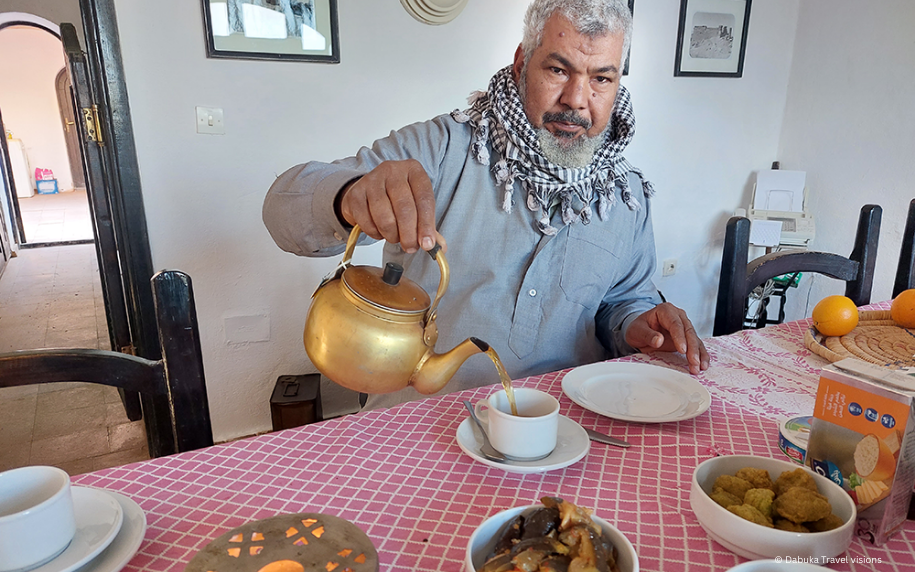
That evening, only my husband and I were there – along with the minder, who generously entertained us at the same time.
A New Year’s Eve celebration without music and fireworks – but in a magnificent landscape, permeated by a special atmosphere. I will never forget this night and will always associate it with the Dakhla oasis.
In fact, the minder, who was also a friend, suddenly died shortly afterwards. So this experience is stamped “unique” once and for all.
Who this oasis trip Egypt is suitable for
This oasis trip is aimed at travelers who:
- Want to get to know Egypt beyond the well-known routes
- Find landscapes more important than sights
- be able to accept long journeys
- Have an interest in geographical and cultural contexts
- Don’t be upset immediately when there are program changes
It is less suitable for guests who:
- Expect short daily journeys
- Search for entertainment or animation
- Want to see as many highlights as possible in a short time
Since we carry out the trip with 2 people or more and the number often stays at this number, you have to be able to tolerate a certain feeling of being alone. In fact, the hotels and lodges along the way are often empty, meaning you may be the only guests.
On the one hand it’s pleasant, you have everything to yourself, but on the other hand it can also have a morbid charm when there’s a kind of veil of dust over everything and you feel like you’re in a Sleeping Beauty castle.

Oasis Trip Egypt Conclusion:
An oasis trip to Egypt in 6 days is like a taster tour.
- It connects spaces, distances and landscapes – and requires time in the vehicle as well as openness to reduced environments.
- At the same time, there isn’t much time anywhere to linger or stay absorbed. You then have to come back again.
- Anyone who knows and accepts this will experience one of Egypt’s most impressive travel regions away from the mainstream.
Suitcase check for oasis adventurers
1️ Clothing
- Lightweight, breathable clothing made from natural fibers (cotton, linen) for daytime temperatures
- Long sleeve shirts/blouses for sun protection
- Lightweight pants for day trips and protection from sand
- T-shirt / short-sleeved shirts for hot hours• Sweater or light jacket for cool evenings/early mornings
- Warm clothing for the desert at night (temperatures can drop significantly)
- Comfortable hiking shoes or sneakers for day trips
- Sandals or open shoes for accommodation/lodge
- Hat or cap for sun protection
- Sunglasses (UV protection, robust)
2️ Personal equipment
- Backpack / daypack for trips• Drinking bottle (at least 1 liter)
- Sunscreen (high SPF)
- Lip balm with UV protection
- Camera / smartphone + charging cable
- Power bank (power supply on the go)
- Small flashlight or headlamp
- Towel / microfiber towel (for lodges)
- Personal hygiene items (toothbrush, deodorant, etc.)

3️ Medical & Safety
- Personal medications
- Small first aid kit: plasters, disinfectants, painkillers, stomach medicine
- Insect repellent (especially in the evening in oases)
- Sun protection clothing and, if necessary, a light neck apron for desert transfers
4️ Optional/Convenient
- Notebook/travel journal
- Books or e-readers for evenings
- Snacks for long journeys
- Binoculars (for desert, birds, landscapes)
- Small water bottle for on the go
5️ Documents & Money
- Passport + copy
- Visa / entry documents
- Health insurance card / international health insurance
- Credit Card / Cash (Egyptian Pounds)
- Accommodation/tour operator contact information
6️ Practical tips
- Choose neutral/colored clothing to hide sand stains
- Multi-layer system: hot during the day, cool in the evening
- Backpack not too big, daypack is enough
- Always carry water, especially when transferring through the White or Black Desert

Oasis Trip Egypt: Photo tips for landscapes and contrasts
1️Time of day and light
- Take advantage of golden hours: Early in the morning and just before sunset, the light provides soft shadows, warm colors and dramatic contrasts.
- Avoid midday light: The sun is high, there are no shadows, the landscape appears flat, and camera overheating can be problematic.
- Sand and limestone landscapes (White Desert, Black Desert) particularly benefit from oblique light that emphasizes the structures.
2️ Capture the landscape correctly
- Depict width: Use foreground elements (rocks, palm trees, dunes) to create depth.
- Pay attention to the horizon: Straight lines, move minimally to create dynamics.
- Show contrasts: In Farafra e.g. For example, photograph the White and Black Deserts together – the color difference is strong.
3️ Camera & Equipment
- Lenses: Wide angle (16-35mm) for landscape, telephoto (70-200mm) for details or animals.
- Tripod: Practical for dawn/dusk light and long exposures.
- Filter: Polarizing filter reduces reflections on sand and water surfaces, ND filter for long exposure of clouds or water.
- Protection: Dust and sand proof bag/camera bag. Microfiber cloth included to keep lenses clean.
4️ People & Oases
- Photograph local life respectfully: In Dakhla or Bahariya, locals can offer interesting subjects in fields or villages, asking for permission beforehand.
- Oases as a scale: The combination of landscape and palm/clay architecture gives perspective on size and extent
5 Technical settings
- Aperture: f/8-f/11 for landscapes to get everything in focus.
- ISO: Keep it as low as possible (100-200) for the best image quality.
- White balance: Daylight or manual to realistically reproduce the warm sandy tones.
6️ Creative ideas
- Traces in the sand: Use footprints or dune edges as lines.
- Shadow: Morning/evening for shapes and depth.
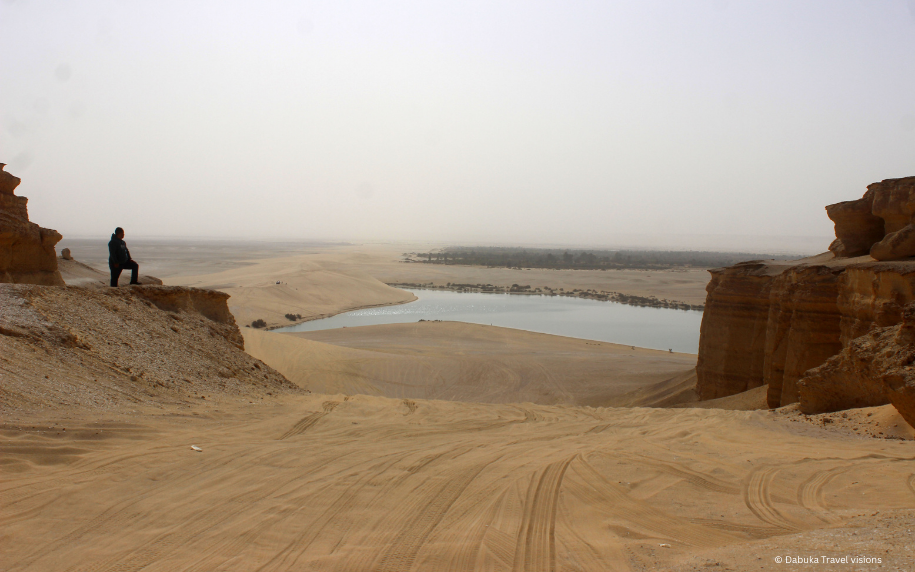
- Reflections: In lakes or small water bodies near Fayoum or Bahariya.
- Panoramas: Vast desert landscapes can be captured well in panoramic shots.